Fr. Juan Puigbó, canonical hermit

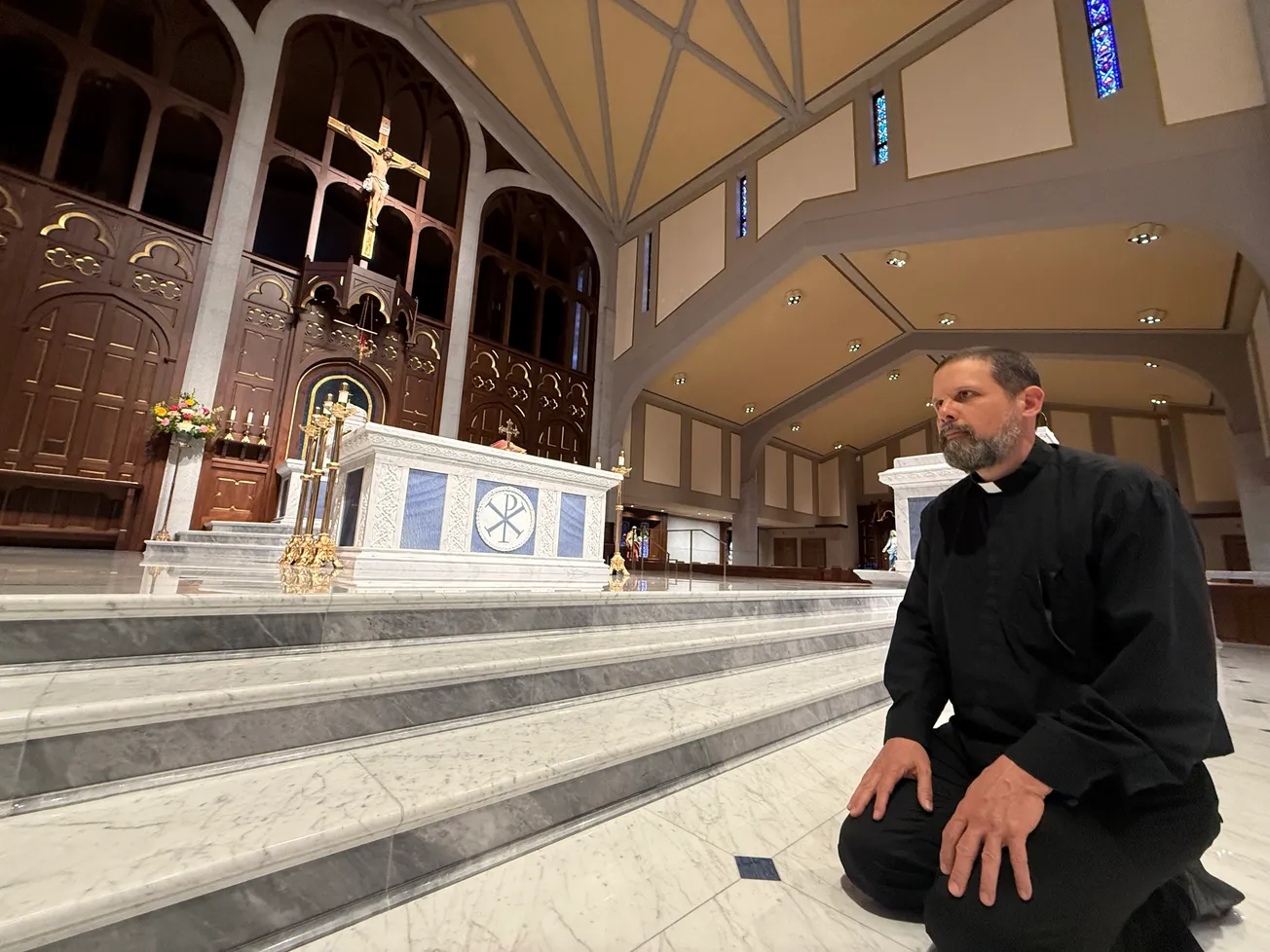
El Tiempo Latino, a U.S. English-language news site covering the Washington, DC region, features an article about Fr. Juan Puigbó of the Catholic parish of Arlington, Virginia, who at forty is leaving parish life to become a canonical hermit. He will live in a secluded location, in a 300 square-foot cabin with modest facilities, and will pursue a rigorous religious schedule.

Article in Spanish; title: “VA: Sacerdote hispano se despide del mundo para siempre en una entrega radical a solas y escondidas. [byline] El padre Juan Puigbó deja la vida parroquial para abrazar la oración y la penitencia en una cabaña de 300 pies al vivir como ermitaño.”

URL: https://eltiempolatino.com/2025/07/16/historias-latinas/va-sacerdote-hispano-se-despide-del-mundo-para-siempre-en-una-entrega-radical-a-solas-y-escondidas/

Jewish Contemplatives

The Jewish Contemplatives blog has long been a unique web presence offering insight on the role of solitude in contemplative Jewish practice. For many years, editor Norman R. Davies of the UK lived in Granada, Spain, before moving several years ago to Safed, Israel. Davies was once a Carmelite monk and converted to Judaism, to an Orthodoxy that embraces contemplation and solitude, recovering an obscure but distinctive tradition within Judaism.

The blog includes Davies’ autobiographical essays: “A Hermit’s Tale.” A recent blog entry is titled “Solitude in Jewish Contemplative Practice.”

URL: https://jewishcontemplatives.blogspot.com/

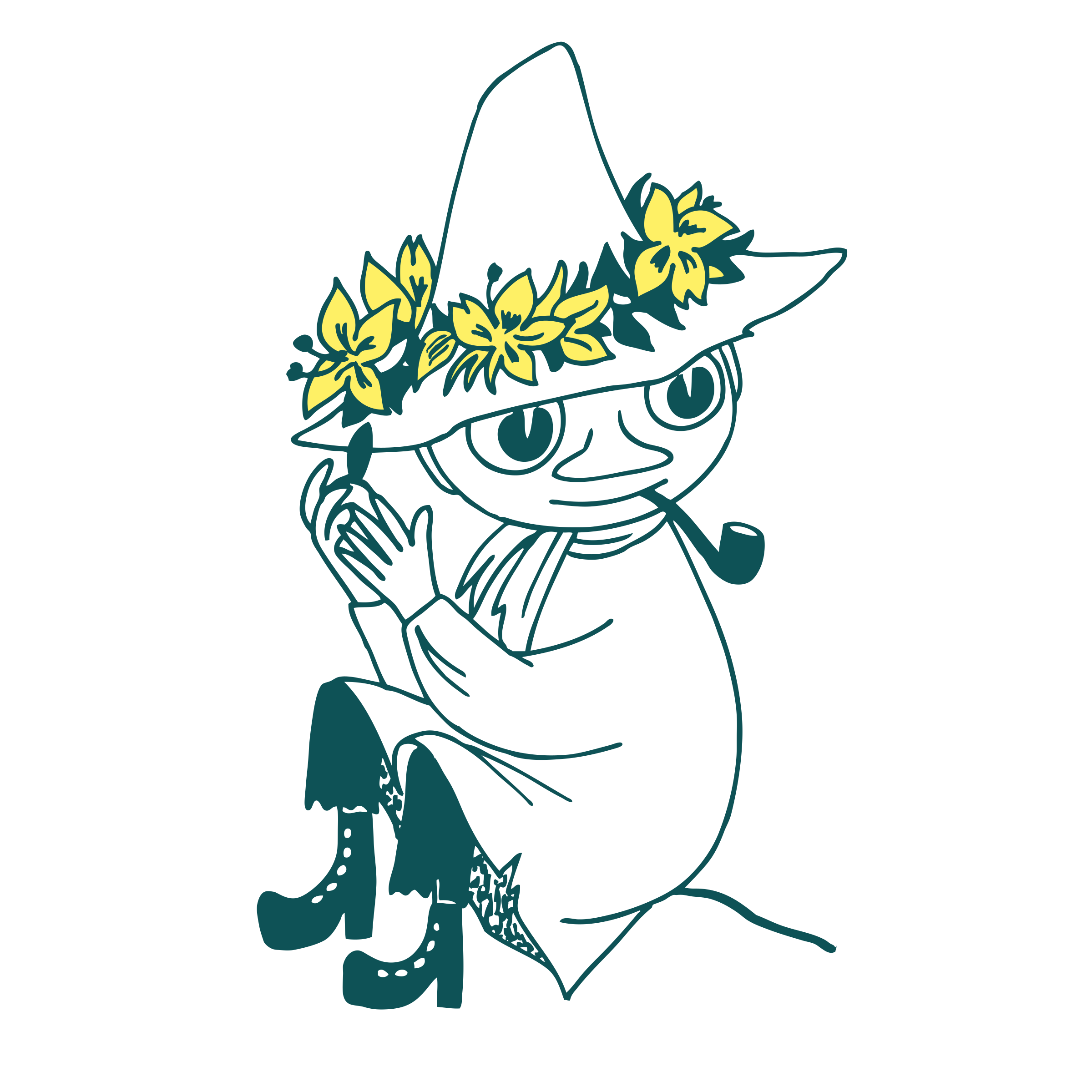
Snufkin, Moomins solitaire

Asgani Sibbuma, aTokyo arts website, reports in its Vox Populi section on an exhibition featuring Snufkin, a character in the Moomins series by Finnish writer Tove Jansson (1914–2001). Snufkin represents a wanderer, a nomadic spirit. Quoting Snufkin: “’One can never be truly free, if one admires someone else too much.”’

As the article author notes:

“Such counsel could only come from someone like Snufkin—a philosophical wanderer, poet at heart, who values freedom, independence and solitude above all else.

As a longtime reader, I’ve always been drawn to Snufkin’s philosophical yet unpretentious words. In one scene from the Moomin books, he advises his friends to leave behind the gemstones they find in the valley, keeping them instead as memories.

“It’s much more fun to keep things in your head than in a suitcase,” the contemplative wanderer says.

I’ve come to believe that Snufkin is a restless traveler because he can only compose poetry and songs when tested by harsh environmen”ts. That’s why he sets off each year before winter, leaving behind a sorrowful Moomin.”

URL: https://www.asahi.com/ajw/articles/15922028

Solitude, childhood, writers

Research Gate offers a free open access acholarly article titled “Loneliness and solitude in gifted writers: the legacies of childhood” published in Journal of Psychosocial Studies. The article is also available as a PDF download. Abstract:

“In this study, we attempt to provide insight into the complex interplay between loneliness/solitude and the writing gift from the early years of life. Theories and research on giftedness, loneliness/solitude, and on the links between them suggest that creative literary production and loneliness/solitude are associated. To further illustrate these associations, we briefly discuss loneliness and solitude in the childhood, adult life and work of four gifted writers: Hans Christian Andersen, EdgarAllan Poe, Robert Louis Stevenson and Beatrix Helen Potter. The theoretical framework of this study is twofold: various psychoanalytic formulations and Bruner’s social constructivist and intersubjective conceptualisation of the narrative gift. The main conclusion of this study is that gifted writers have, paradoxically, an intense experience of both painful and beneficial aloneness, which is the inevitable outcome of the writing gift but also becomes the inspiration and motive force for ars poetica.”

URL: https://www.researchgate.netpublication/378636182_Loneliness_and_solitude_in_gifted_writers_The_legacies_of_childhood