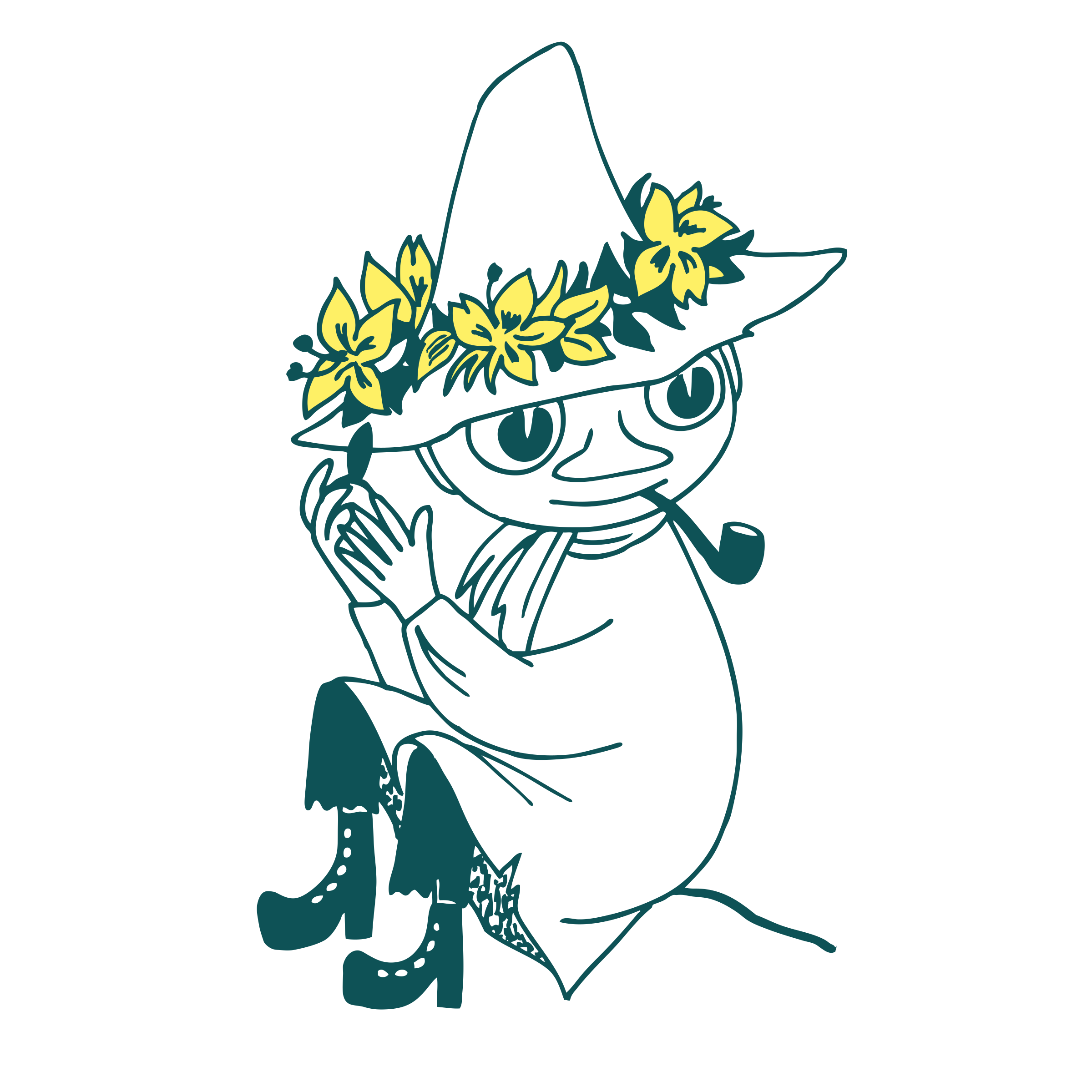
Snufkin, Moomins solitaire

Asgani Sibbuma, aTokyo arts website, reports in its Vox Populi section on an exhibition featuring Snufkin, a character in the Moomins series by Finnish writer Tove Jansson (1914–2001). Snufkin represents a wanderer, a nomadic spirit. Quoting Snufkin: “’One can never be truly free, if one admires someone else too much.”’

As the article author notes:

“Such counsel could only come from someone like Snufkin—a philosophical wanderer, poet at heart, who values freedom, independence and solitude above all else.

As a longtime reader, I’ve always been drawn to Snufkin’s philosophical yet unpretentious words. In one scene from the Moomin books, he advises his friends to leave behind the gemstones they find in the valley, keeping them instead as memories.

“It’s much more fun to keep things in your head than in a suitcase,” the contemplative wanderer says.

I’ve come to believe that Snufkin is a restless traveler because he can only compose poetry and songs when tested by harsh environmen”ts. That’s why he sets off each year before winter, leaving behind a sorrowful Moomin.”

URL: https://www.asahi.com/ajw/articles/15922028

Tove Jansson’s island

An article in The New European titled “The island life of Tove Jansson,” describes the post-Moomins life of Tove Jansson, creator of the popular children’s book series featuring the Moomins. She avidly pursued solitude on an island off the coast of FInland, living there intermitently the rest of her life. A Jansson quote: “If I could wish something good for someone, I would wish for them an island with no address.”

URL: https://www.theneweuropean.co.uk/brexit-news/the-island-life-of-tove-jansson-8066592

Veijo Rönkkönen, recluse Finland artist

Yahoo! News reprints a 2015 article in Dornob.com about Veijo Rönkkönen, an artist of Finland, “described as a recluse by those who knew him, and how he spent his time was known to few. But following his death in 2010, over 500 concrete figures were discovered sprawled throughout the forest where he lived. Now known as the Veijo Rönkkönen Sculpture Garden, the extensive outdoor museum is a result of 50 years of loving artistry that currently attracts around 40,000 visitors annually.”

URLs: https://news.yahoo.com/over-500-sculptures-found-finland-212243304.html; https://dornob.com/over-500-sculptures-found-in-finland-after-artists-death/.

Silence & the brain

A Nautilus Magazine article on the neuroscience of silence titled “This is Your Brain on Silence.” A popularized review of the scientific research that demonstrates, surprisingly to many, that the brain is actively and positively stimulated by silence as much as by sound. The brain deteriorates as excessive sound or noise assaults the body via blood pressure increases and cellular changes. Further, silence promotes a higher sense of alertness and consciousness. Investigators mentioned ranged from neuroscientists and cardiologists to musicians naturally interested in the neurological role of silence in musical compositions, and tourism marketers seeking to promote Finland’s abundance of silence. From the article:

Noora Vikman, an ethnomusicologist … lives in the eastern part of Finland, an area blanketed with quiet lakes and forests. In a remote and quiet place, Vikman says, she discovers thoughts and feelings that aren’t audible in her busy daily life. “If you want to know yourself you have to be with yourself, and discuss with yourself, be able to talk with yourself.”

URL: http://nautil.us/issue/16/nothingness/this-is-your-brain-on-silence; summary:
http://www.designntrend.com/articles/18934/20140905/noise-silence-neuroscience.htm