Three video conversations with The Mountain Path film director Edward A. Burger. The conversations followed public screenings of the film.
1. Video recording of the conversation between Edward A. Burger and John Kieschnick, professor of Buddhist Studies at Stanford University. URL: https://www.youtube.com/watch?v=TAyOdj_ZIjI
2. Video recording of the conversation between Edward A. Burger and Buddhist monk Rev. Heng Sure, Vice-President for Religious Affairs and Dean of Translation and Language Studies at Dharma Realm Buddhist University. URL: https://www.youtube.com/watch?v=fAVpO1ZqEnA
3. Video recordingof a conversation between Edward A. Burger and Bill Porter, moderated by Gaetano Kazuo Maida, Buddhist Film Foundation Executive Director/Chief Programmer. Sponsoredby the California Film Institute and the Buddhist Film Foundation . URL: https://www.youtube.com/watch?v=bZvKpeKikBM
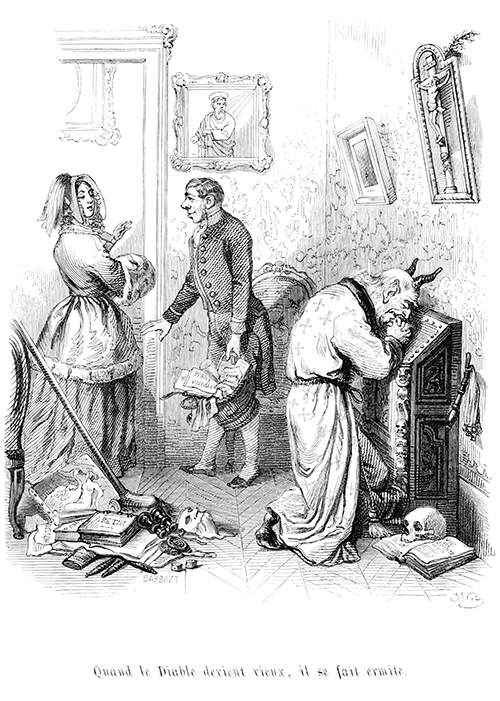
Old Book Illustrations features “Devil Turned Hermit,” from an early 19th-century book titled Cent Proverbes.
The book describes the illustration:
“The Devil, in the guise of an old man with horns, has a female visitor shown to the door and his worldly paraphernalia swept away while he immerses himself in prayer among symbols of asceticism.” Adds the website editors: “The caption reads in the original French: Quand le Diable devient vieux, il se fait ermite. This proverb has a loose English equivalent in The Devil was sick, the Devil a monk would be.“
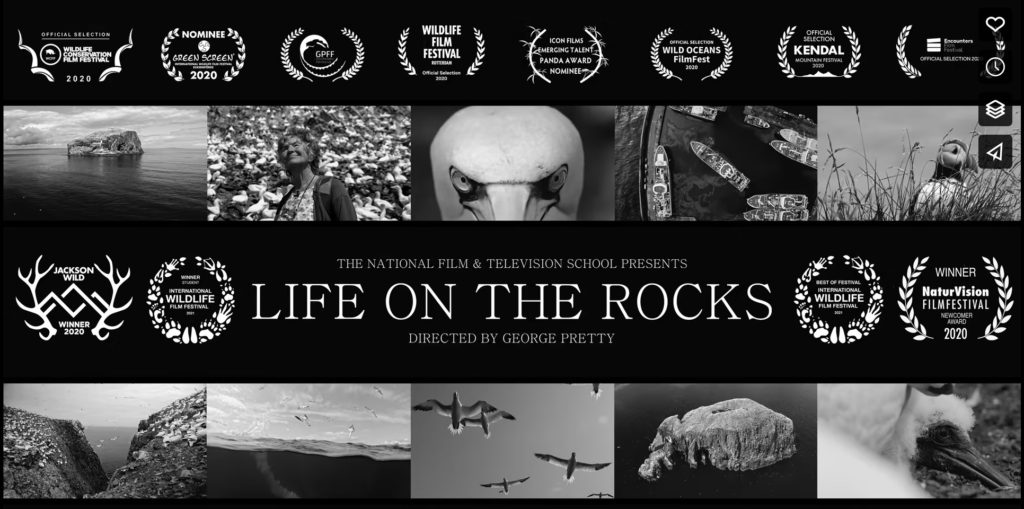
Life on the Rocks is a 20-minute documentary film about a newsly-wed husband and wife naturalists who spent three years in virtual isolation on a rugged Scottish island studying the bird population. From Psyche Films:
“Two newlyweds carve out a life on a small rock island, among the seabirds
The Bass Rock is a small volcanic island just off the east coast of Scotland. Prominent in the Scottish imagination for its steep terrain and location in the Firth of Forth near Edinburgh, the island has had a sparse and intermittent human population across the centuries. Its most notable and sustained inhabitants are the northern gannets that have dwelled on the island’s jagged cliffs throughout recorded history. With a population of roughly 150,000 birds, their colony is the largest in the world.
The English naturalist June Nelson is one of the few people who have lived on the Bass Rock. For three years in the early 1960s, she and her late husband, the ornithologist Bryan Nelson, who was researching gannets at the University of Oxford, made the island their makeshift home. Living and working out of a small, derelict chapel, they dedicated themselves to observing and recording the behaviours and ecology of the birds. The then-newlyweds had little contact with the outside world, but forged a happy life together, thriving in conditions most would find gruelling.
In the short documentary Life on the Rocks, Nelson revisits her full and focused years on the Bass Rock. Combining sweeping, cinematic black-and-white shots of the island with a string score, the UK director George Pretty crafts a poignant account of Nelson’s cherished time there, as well as her emotional return. Mining Nelson’s memories and old photographs, the film explores how the husband-and-wife team found happiness on this peculiar patch of Earth, and among its many avian inhabitants. But, more than just a fondness for the past, Nelson communicates an impassioned urgency to protect the plummeting global sea-bird population – which has declined by 70 per cent in her lifetime – asking ‘What right have we to deprive [future generations] of this wonderful place?”
Nepal media source MyRepublica offers a gallery of photographs featuring “Hindu hermits from different countries [who] have come to the Pashupatinath Temple to celebrate the Mahashivaratri festival.” Estimates suggest that “about two million pilgrims will visit the Pashupatinath Temple during this Mahashivaratri.”
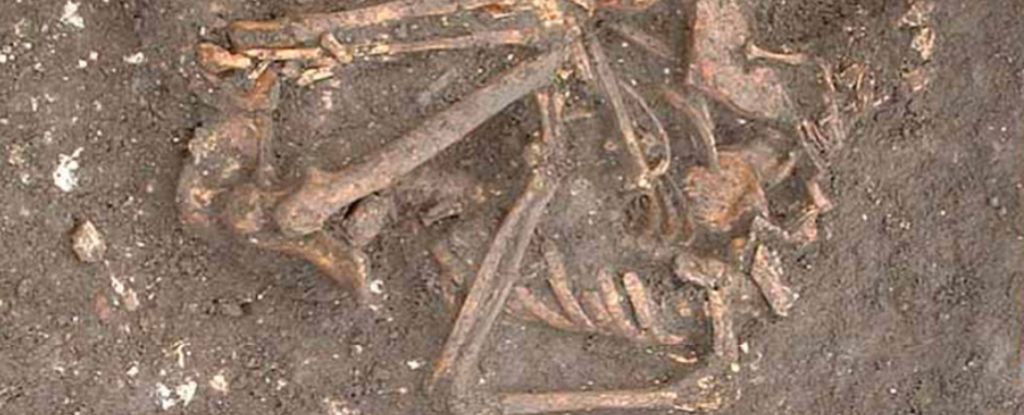
ScienceAlert reports a rare archaeological discovery: the remains of a medieval anchoress who appears to have died of a bone disease, perhaps septic arthritisor venereal syphilis, the latter possibility suggesting a penitential motivefor her eremitism. Notes ScienceAlert:
In 15th century England, a woman by the name of Lady Isabel German tucked herself away in a room of the All Saints Church near York. For 28 years, she lived in religious solitude as an ‘anchoress’, praying and contemplating God from the confines of a sealed cell.
Five hundred years later, remains thought to belong to the anchoress have been found in the recesses of the dilapidated church, buried in a curious fashion.
While experts are not absolutely certain that this body belongs to Lady German, the dating of the remains matches closely with historical records.
If archaeologists are right, Lady German’s story helps reveal a medieval practice “rarely reflected in the archaeological record.”
A life spent between four walls in solitary confinement might sound restrictive from a modern perspective, but many lay women in centuries gone volunteered for a life of isolation to avoid the social and financial dependence that came with marriage, or the lack of rights that came with being an unmarried spinster.
To some, the privacy, excusal from domestic slavery, absolution of sin, and autonomy were all seen as benefits that came with being an anchoress.
“The new study data allows us to explore the possibilities that Lady German chose to devote herself to a life of solitude as a way to remain autonomous and in control of her own destiny,” says archaeologist Lauren McIntyre from the University of Sheffield and Oxford Archaeology Limited.
“This chosen lifestyle would also have made her a highly significant figure within the local community, and she would have been viewed almost like a living prophet.”