The COVID pandemic has stimulated essays, blog posts, and ruminations on solitude and loneliness for iover a year, but often uneven, unfulfilled, and unconnected to larger themes. Many of these sincere efforts miss opportunities to express larger contexts.
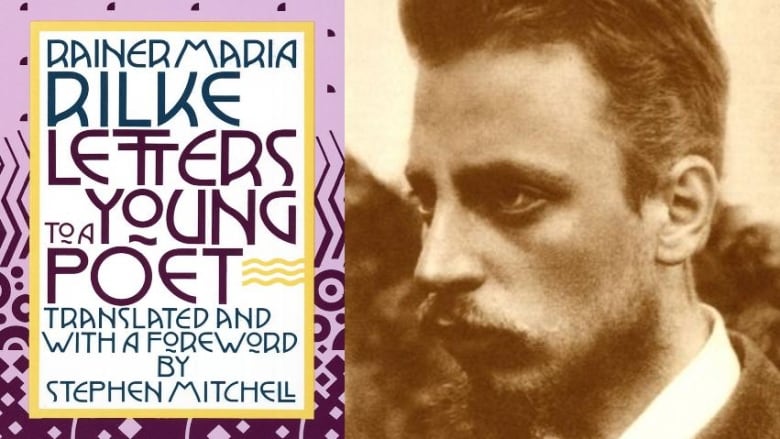
Once in a while, a good connection to a classic or universal writer, poet, thinker, or theme is most welcome. An example is a Canadian Broadcasting Corporation essay on solitude and the Auistrian poet Rilke, titled “‘Live the questions now’: Reading Rilke in a time of uncertainty, grief and solitude.”
The essay pursues poets, writers, solitaries, and suffering people, following the course of solitude in their lives and the balm of discovering Rilke and the theme of giving oneself “permission for solitude.”
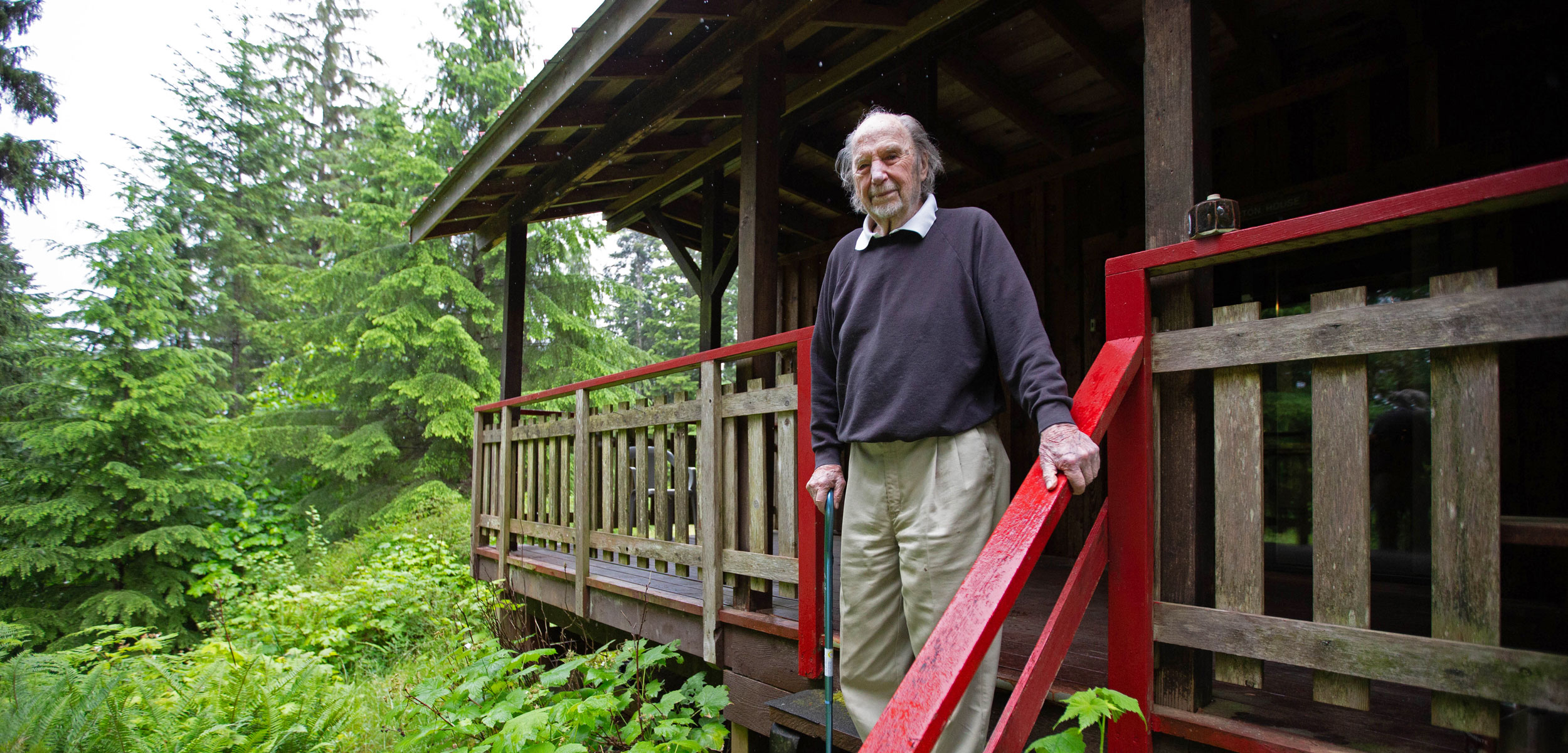
The Vancouver Island Free Daily reports the death of Charles Brandt, Catholic priest, hermit, and dedicated environmentalist. (Brandt has been mentioned elsewhere in this blog, and a film featuring Brandt and Thomas Merton.) Because such news item often disappear, here is the text of the October 27report.
“A well-known Comox Valley environmentalist and Catholic priest-hermit who lived on a 27-acre property in Black Creek has died.
Father Charles Brandt devoted his life to protecting and preserving natural habitats and inspired generations of volunteers to work together to protect and preserve forests and rivers. As a spiritual leader and conservationist, he helped establish the Tsolum River Task Force, which ultimately became the Tsolum River Restoration Society.
He continued to act as one of the society’s directors. He was also instrumental in creating the Oyster River Enhancement Society, contributing to the return of salmon and trout stocks in the river.
In 2019, he granted a conservation covenant on his 27-acre property to the Comox Valley Land Trust which will protect the mature forest and riparian areas in perpetuity.
Brandt, who was 97, passed away early Sunday morning (Oct. 25). According to his close friend Bruce Witzel, Brandt was seriously ill in hospital with pneumonia.
“Charles lived a life of contemplative prayer as a hermit priest. He was also well-loved and active in the larger community, within and without a diverse circle of his friends and affiliates,” noted Witzel.
In late September 2020, Brandt was named the recipient of the Canadian Museum of Nature’s Lifetime Achievement award for their 2020 Nature Inspiration Awards.
Brandt, who was born in Kansas City, MO., became an islander in 1965. A year later, he was ordained to the Catholic priesthood at the Canadian Martyrs Church in Courtenay, which is now a theatre. He was mandated to live the life of a hermit priest.
“Which is pretty unusual,” he told the Record in 2011. “I came from the Trappist Monks, that’s a benedictine order. Everybody knew about the hermits on Vancouver Island from all over the world. It was a group that wanted more solitude that you couldn’t find in the big order…I came from New Melleray Abbey (Iowa) to join the hermitage on the Tsolum River — when the mine was going in on Mount Washington.”
As a member of the Hermits of St. John the Baptist, Father Charles first lived in a cabin he constructed near Headquarters Creek in the Tsolum River watershed before moving his hermitage to the banks of the Oyster River.
Prior to moving to Canada, Brandt had served as a navigator with the U.S. air force during the 1940s. He later graduated with a bachelor of science in ornithology from Cornell University and a bachelor of divinity from Nashotah House, a theological seminary in Wisconsin.
Brandt was also a gifted author. His published books include Meditations From the Wilderness and Self and the Environment.
He was also the subject of a chapter entitled A Hermit of the Rivers, which appears in the Stephen Hume book A Walk with the Rainy Sisters.
Hume, a writer for the Vancouver Sun, was among a crowd that squeezed into a Campbell River church in 2007 to celebrate Brandt’s 40th anniversary as a hermit priest.
Hume writes: “Brandt represents an ancient tradition of wise men and women withdrawing from the world, the better to reflect upon how best to serve God.”
The National Post of Toronto describes Darren Rogers, “the recluse of Cockburn Island.” Rogers has resided on the island for fourteen years. The island is a summer resort with up to two-hundred vacationers, but with the end of summer, he is left alone. “As island caretaker, Rogers looks after road maintenance, building repairs, safety equipment, tending to the needs of the summer residents — ‘it’s all rolled into one job,’ he says. His years working as a farm hand on various dairy farms in Ontario and operating heavy equipment have prepared him for the physical labour. But his work experience wasn’t the only thing that got him the job. ‘The biggest thing here is you have to be willing to live out here,’ he said. ‘It’s not a five-day-a-week job, it’s 24/7.'”
A Canadian-Jewish version of the story of Agafya Lykov, Russian Siberian hermit familiar to Hermitary readers, is pursued by a group of young writers, reported in the Canadian Jewish News as “Letters From a Hermit Raised In The Siberian Wilderness.” The drama is presented as an exchange of correspondence.
Hakai Magazine profiles the Catholic priest and hermit Charles Brandt, who lives on Vancouver Island. At 95, the naturalist reflects on nature, solitude, and spirituality in an article about him titled “The Oracle of Oyster River.” (Fr.Brandt has been cited in this blog several times.)