Bill Porter interview

A February 2019 interview of Bill Porter, author of Road to Heaven: Encounters With Chinese Hermits, in Emergence Magazine. The interview is titled “Lone Moon Lights Cold Spring,” with the byline: “In this in-depth interview, Bill Porter, famously known as the translator Red Pine, reflects on his encounters with Chinese hermits and his long history with the great Taoist and Buddhist poets of China.” Among the range of China topics, Porter discusses his favorite hermits Cold Mountain and Stonehouse. Available as audio or transcript.

URL: https://emergencemagazine.org/story/lone-moon-lights-cold-spring/

Merton’s hermitage

Atlas Obscura website highlights Thomas Merton’s hermitage. As a Trappist monk in Gethsemani Monastery in Kentucky, Merton wrote prolifically about hermits and solitude but was not able to convince his abbot to grant him solitary living quarters until late in his life.

“Merton’s search for solitude resulted in several impromptu hermitages. Initially, he lived periodically in a steel grain cart. Then, a makeshift shack somewhere on the property. In 1965, he was granted permission to build and inhabit an official hermitage on the property. His hermitage continues to be in use by other monks. Merton had essentially reintroduced the idea of eremitic life to his monastic order, and now they accept monks who want to become hermits.”

URL: https://www.atlasobscura.com/places/thomas-mertons-hermitage

Skete added to Russian monastery

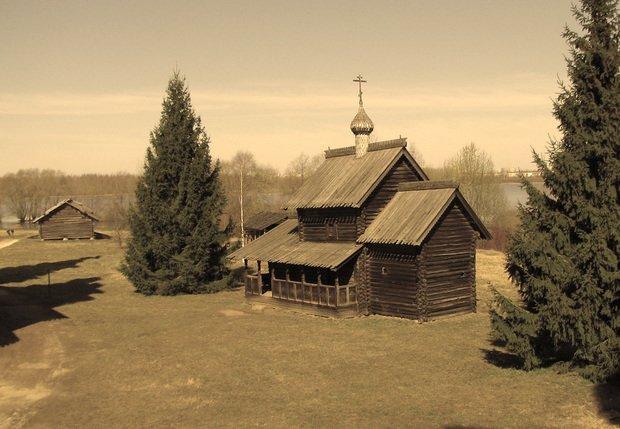
Realnoe Vremya reports that a Russian Orthodox monastery is adding a skete: “The construction of a skete 20 kilometres far from the Raifa Monastery where the brethren of the monastery will go to pray and live in seclusion has begun.” Use of the skete will rotate among the monks so that all will have an opportunity to partake of the silence and isolation. The skete will be built of wood. An apiary is already on the grounds. A garden and greenhouse will be added. (The image above is that of a chapel already on the site.)

URL: https://realnoevremya.com/articles/3564-raifa-monastery-brethren-to-be-helped-to-live-in-silence

Himalayan hermit

The “Himalayan hermit” is Swami Yogeshwarananda Giri, who presently teaches the Bhagavad Gita, the Upanishads, the Christian gospels, and meditation on occasional retreats. From his website:

He is a hermit monk of the Advaita Vedanta order of India, who has been living the contemplative life of a monk for the past 50 years. Often living in a cave during the summer at an altitude of 10,000 feet at Gangotri, near the source of the river Ganges.
Swami Yogeshwarananda has led a deeply contemplative life since the 1960s when he left home at the age of 22 to live a secluded life of a hermit. His early years were spent in a systematic study of the ancient Sanskrit scriptures, which was taught to him by other scholarly monks. He followed the tradition of monks, living an austere life in a hut at the foothills of the Himalayas on the banks of the sacred Ganges in Rishikesh. Also he spent 10 years in the interior of the Himalaya’s in Uttara-kashi with contemplative monks.

URL: https://himalayanhermit.com/

Hong Kong “hikikomori”

South China Morning Post reports on the hikikomori phenomena in Hong Kong in an article titled “Hong Kong’s hidden youth: societal pressure driving city’s young into apathy and reclusiveness” and bylines: “Hikikomori trend is widely known in Japan, but receives little attention here, where up to 2 per cent of the population may be withdrawn.
Confucian societies are seen as more susceptible because of parental pressure and peer expectations.”

URL: https://www.scmp.com/news/hong-kong/health-environment/article/3009450/hong-kongs-hidden-youth-societal-pressure-driving; https://www.asiaone.com/asia/hong-kongs-hidden-youth-why-citys-young-are-becoming-recluses